AarogyaDoot: Healthcare Case Study
99.86%
Claim Accuracy Maintained
3X Faster
Onboarding & Claim Processing
100% Digital
Workflow Transformation
0
Internal Tech Team
Industry
Healthcare / Government Schemes / Insurance
Timeline
6+ Years (Ongoing)
Company Stage
Operations-Led Organization
Timeline
2024 – 2025
Team Size
5 -7 Engineers
About AarogyaDoot
AarogyaDoot is a healthcare operations organization that assists citizens in utilising government health schemes through on-site hospital desks and a centralized back-office support team.
The organization has consistently maintained 99.86% claim accuracy, strict adherence to turnaround timelines (TATs), and compliance with scheme guidelines. Their work directly impacts patient care coordination, claim approvals, and financial flows between hospitals, insurers, and government systems.
Despite operational excellence, their processes were heavily manual. Claim tracking, onboarding, document handling, and reporting depended on fragmented systems and human coordination.
The leadership had deep domain expertise but lacked internal technical capability to translate it into a scalable platform. They needed more than development. They needed end-to-end technology ownership.
The Founder’s Vision
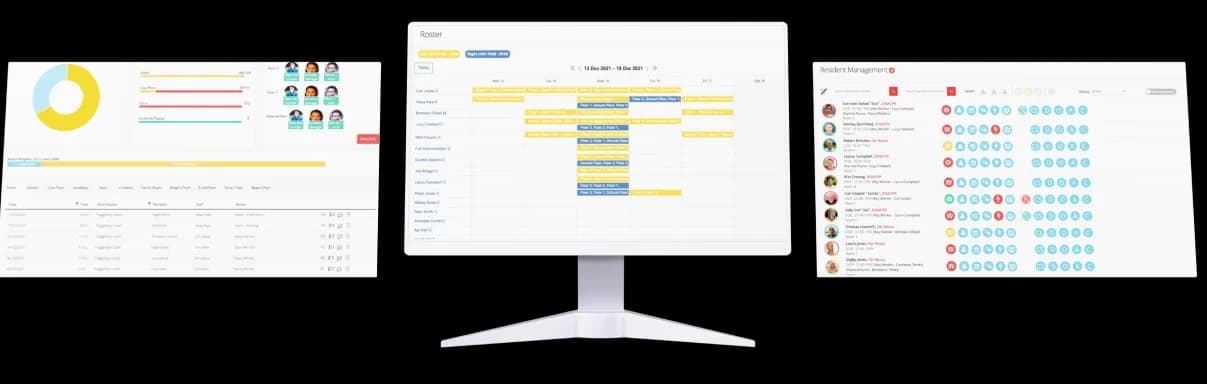
The objective was not to build “software.” It was to build a system that could handle complex healthcare claim workflows, ensure compliance across multiple schemes and stakeholders, reduce manual dependency without losing accuracy and scale operations without increasing overhead.
The expectation from V2STech was clear:
Own the technology layer completely, from thinking to execution to support.
The Challenge: Building Systems Without Technical Context
AarogyaDoot’s constraints were not typical engineering challenges. They were structural and knowledge-driven gaps.
Operational Challenges
- No internal IT team or technical leadership
- Difficulty translating workflows into software requirements
- Heavy reliance on manual onboarding and claim processing
- Limited understanding of system scalability and lifecycle
- Concerns around long-term maintenance, upgrades, and support
Execution Complexity
Multi-stakeholder coordination (Hospitals, TPAs, Patients, Government portals)
High dependency on accuracy and compliance
Real-time data requirements with audit visibility
Need for field-level access and central control
The Stakes Were Operationally Critical
This was not an experimental SaaS build. The platform had to:
Work from day one in live environments, support real patient and claim data, maintain compliance with strict guidelines, Scale without disrupting existing operations. Failure here would not mean “iteration."
It would mean operational breakdown.
Our Approach: Building end-to-end Scalable Application
V2STech did not operate as a vendor. We took full ownership of the technology function.
Discovery & Business Translation (Week 1–4)
We began by deeply understanding the operational model.
- Claim lifecycle from enrollment to settlement
- TPA coordination and hospital workflows
- Compliance checkpoints and validation layers
- Data flow between stakeholders
- Workflow-to-system mapping
- Feature prioritization aligned with real usage
- Scalable architecture blueprint
- Technology stack recommendation
MVP Development: Usability First, Complexity Hidden (Month 2–4)
The MVP was designed for non-technical users operating in high-pressure environments.
- Patient enrollment and management
- Case lifecycle tracking
- Document upload and verification
- Claim processing workflows
- Role-based dashboards
- Minimal learning curve
- Clear navigation for operations teams
- Real-time status visibility
- Role-based access control
Communication Model: Removing Technical Friction (Month 5-8)
Since the client had no technical background, communication became a critical component of execution.
Visual wireframes instead of technical documentation, Interactive demos for feature validation, and a dedicated product manager as a single point of contact.
Faster decisions, Minimal rework and High client confidence
Scalable Architecture & Deployment (Month 9-10)
This phase focused on making the platform enterprise-ready by embedding regulatory compliance, robust security, and operational resilience into the core architecture. The goal was to ensure the solution could withstand audits, scale securely, and meet strict UK healthcare standards.
- Deployment on Google Cloud Platform (GCP) ensuring high availability, scalability, and uptime
- Secure API-driven backend using Python (Django/Flask) with structured workflow validation
- Reliable data management through MySQL with daily backups and monitoring system
- Role-based access control and SSL encryption to ensure data security and compliance
- Mobile application enablement for field staff with real-time access and updates
Post-Deployment Enablement & Continuous Support (Month 9 to Present)
This ongoing phase reflects V2STech’s role as a long-term technology partner, ensuring sustained adoption, system stability, and continuous improvement based on real-world usage. The focus remains on operational efficiency, scalability, and evolving business needs.
- Structured onboarding and training programs to drive full user adoption across teams
- Continuous system support and rapid issue resolution to maintain operational stability
- Feature enhancements based on real-time user feedback and workflow improvements
- Regular system upgrades to ensure scalability, performance, and long-term reliability
- Ongoing collaboration with stakeholders to align the platform with evolving operational needs
Technical Architecture: Built for Healthcare Standards
The technology choices that enabled AarogyaDoot to scale safely and stay compliant

Frontend Stack
- React.js for responsive and intuitive UI
- Component-based architecture for scalability

Backend Stack
- Python (Django/Flask) for secure API development
- Structured workflow handling and validation

Database
- MySQL for reliable and efficient healthcare data management
- Android application deployed for field staff
- Real-time updates and accessibility

Infrastructure & DevOps
- Google Cloud Platform (GCP) for scalability and uptime
- Daily backups and monitoring systems
- Secure hosting with SSL encryption
The Results: From Manual Execution to Scalable Systems
Healthcare outcomes, operational ROI, and acquisition value
99.86%
Claim accuracy
3×
Faster Onboarding
100%
Automation
Low
Dependency
Business Impact
50%
Admin Time Reduction
Faster coordination between hospitals, TPAs, and patients
60%
Faster Compliance Reporting
CQC reporting reduced from days to hours with automation
100%
Building Transparency
Built complete transparency across claim lifecycle
Project Timeline: From Concept to Full Digital Transformation
Understanding claim lifecycle, compliance requirements, and operational dependencies
Core modules built and deployed for initial workflows
Scaled from 10 → 40 facilities, added analytics dashboard, financial module, family apps
System enhancements, feature expansion, operational scaling
Key Lessons from the AarogyaDoot Journey
What we learned building Government compliant healthcare infrastructure
Technology Partnership Drives Success
Systems Must Adapt to Users, Not Vice Versa
Clarity Accelerates Execution
Domain Understanding is Non-Negotiable
Explore Other Case Studies
Ready to Digitize Complex Healthcare Operations?
AarogyaDoot transformed from manual workflows to a scalable, compliant digital system, without building an internal tech team.
Trusted by founders and technology leaders across UK, USA, India and global markets.