
QFix: Payment Reconciliation Platform Acquired by India's Leading FinTech Unicorn
₹50Cr+
Acquisition Value
4Years
MVP to Exit
1000+
Merchants Integrated
₹100Cr+
Daily Transactions
Industry
FinTech / Payments
Company Stage
Startup → Acquisition
Timeline
2016 - 2019
Team Size
10 → 15 Engineers
Outcome
Acquired by Pinelabs
About QFix
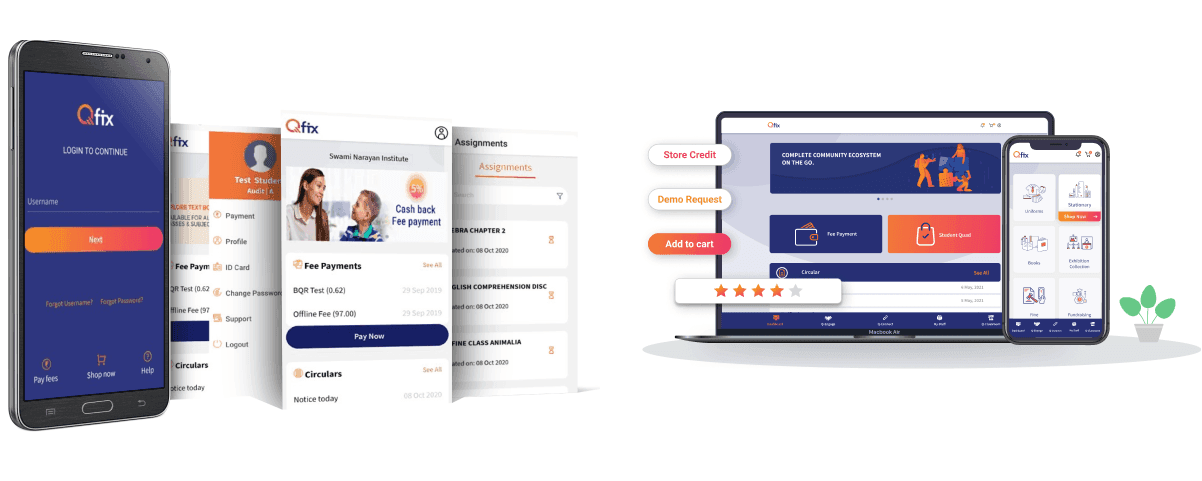
QFix started as a bold vision: to solve the payment reconciliation nightmare that plagued Indian merchants. Every day, thousands of merchants struggle to match transactions across multiple payment gateways, banks, and accounting systems. Manual reconciliation took days, errors cost millions, and cash flow suffered.
The founders came to V2STech with a clear problem but were uncertain about the technical path forward. They needed a platform that could handle complex financial data, integrate with dozens of payment providers, and scale as they grew from 10 merchants to 1000+.
What started as an MVP became a mission-critical platform for India's e-commerce ecosystem, so valuable that Pinelabs, one of India's leading FinTech unicorns, announced to acquire QFix in 2022.
The Founder's Vision
"I have been using their services for the last 36 months. I am highly satisfied with their services, their availability, hard-working attitude, and the culture towards the customer. I will recommend them to everyone looking for similar services like platform and software development. My overall experience has been highly satisfactory."
- Venugopal Choudary, MD, Qfix Infocomm, India
The Challenge: Building a Payment Platform That Never Breaks
QFix's founders needed more than software. They needed a rock-solid platform that merchants would trust with their financial data.
Payment Gateway Integrations
Integrate with 15+ payment gateways (Razorpay, PayU, Paytm, etc.), each with different APIs, data formats, and reconciliation logic. One API change could break thousands of merchants.
Real-Time Processing at Scale
Process millions of transactions daily in near real-time. Merchants needed reconciliation reports within minutes, not days. Any delay meant cash flow issues.
Financial Data Security
Handle sensitive financial data with bank-grade security. One breach would destroy trust. Needed SOC2 compliance, encryption at rest/in transit, and audit trails for everything.
Zero-Downtime Requirement
Merchants run 24/7 businesses. Every minute of downtime meant lost transactions, frustrated customers, and churn. Needed 99.99% uptime from day one.
The Stakes Were High
QFix was competing against established players with years of market presence. They had one shot to prove their platform was better, faster, and more reliable. The technical execution had to be flawless; any major bug or outage would kill the business before it took off.
Our Approach: Building for Scale from Day One
We didn't just build an MVP-we architected a platform designed to handle unicorn-scale growth.
Discovery: Understanding Payment Reconciliation (Week 1-2)
Before writing a single line of code, we spent 2 weeks with QFix's founders and 5 early merchants understanding the reconciliation workflow: how payments flow from customer → gateway → merchant bank account, what data discrepancies occur, and how merchants currently handled this manually.
- 15+ payment gateways with different APIs
- Transaction matching rules vary by gateway
- Merchants need reports within 30 minutes
- Accuracy matters more than speed
- Microservices for each gateway integration
- Event-driven architecture for scalability
- PostgreSQL for transactional data
- Redis for real-time caching
MVP Development: Core Platform (Month 1-3)
We built the MVP with 3 payment gateway integrations (Razorpay, PayU, Paytm) and launched with 10 pilot merchants. The goal: prove the reconciliation logic worked perfectly before scaling.
- Core reconciliation engine
- 3 gateway integrations
- Transaction matching algorithms
- Basic merchant dashboard
- Automated reconciliation reports
- Email alerts for discrepancies
- Export to Excel/CSV
- API for third-party integrations
- Testing with 10 pilot merchants
- Bug fixes & performance tuning
- Security audit & penetration testing
- Launch-ready production deployment
Growth and Scaling Phase: 10 → 1000+ Merchants (Month 4-36)
Once the MVP proved successful, we entered rapid growth mode. Every month brought new payment gateways, more merchants, and higher transaction volumes. The platform had to scale without breaking.
Added 5 more gateway integrations. Scaled infrastructure to handle 10K transactions/day. Implemented auto-scaling on AWS.
Onboarded 200+ merchants. Built advanced analytics dashboard. Added multi-currency support. Processing 100K+ transactions/day
Crossed 1000 merchants. Integrated with accounting software (Tally, QuickBooks). Processing ₹100Cr+ daily. SOC2 Type II certification achieved.
Acquisition Preparation (Month 37-48)
- Clean, well-documented codebase (80%+ test coverage)
- Scalable microservices architecture (ready for 10X growth)
- SOC2 Type II compliant infrastructure
- Zero customer churn in previous 12 months
- Proven technology team that could transition smoothly
Technical Architecture: Built to Last
The technology choices that enabled QFix to scale from startup to acquisition

Frontend Stack
- React + TypeScript: Type-safe component library for merchant dashboard. Reusable components across 50+ screens.
- Redux for State Management: Centralized state management for complex financial data and real-time updates.
- Chart.js for Analytics: Real-time transaction graphs, reconciliation trends, payment gateway performance metrics.
- Material-UI Components: Professional UI components for enterprise merchants. Accessibility-first design.

Backend Stack
- Node.js + Express: Microservices architecture. Each payment gateway as separate service for isolation.
- PostgreSQL Database: Transactional data with ACID guarantees. Critical for financial reconciliation accuracy.
- Redis Caching: Real-time transaction status updates. Sub-second response times for merchant dashboards.
- RabbitMQ Message Queue: Asynchronous processing of millions of daily transactions. Fault-tolerant event streaming.

Infrastructure & DevOps
- AWS Cloud Platform: EC2 auto-scaling, RDS for database, S3 for backups, CloudFront CDN for global delivery.
- Docker + Kubernetes: Container orchestration for microservices. Zero-downtime deployments with rolling updates.
- CI/CD Pipeline: GitHub Actions for automated testing and deployment. Every commit tested before production.
- Monitoring & Logging: Datadog for application performance, ELK stack for centralized logging, PagerDuty for alerts.

Security & Compliance
- SOC2 Type II Certified: Annual third-party audits. Complete audit trail for every transaction and data access.
- End-to-End Encryption: TLS 1.3 for data in transit. AES-256 for data at rest. AWS KMS for key management.
- Role-Based Access Control: Granular permissions for merchant users. Multi-factor authentication for admin access.
- Regular Penetration Testing: Quarterly security audits by third-party firms. Vulnerability scanning on every deployment.
Microservices Architecture
Each payment gateway integration was isolated as a separate microservice. When Paytm changed their API (which happened 3 times in 2 years), only one microservice needed updates—the rest of the platform kept running without disruption.
Gateway Services
15 independent services, one per gateway. Auto-retry logic, circuit breakers for fault tolerance.
Reconciliation Engine
Core matching algorithms. Handles edge cases like partial refunds, chargebacks, currency conversions.
Reporting Service
Generates PDF/Excel reports on-demand. Scheduled daily/weekly summary emails to merchants.
The Results: From MVP to ₹50Cr+ Acquisition
Numbers that convinced Pinelabs to acquire QFix
₹100Cr+
Daily Transaction Volume
99.98%
Uptime Achieved
15Min
Reconciliation Time
Zero
Customer Churn
Business Impact for Merchants
₹2.5L/year
Average Savings per Merchant
By eliminating manual reconciliation staff and reducing payment discrepancies
85%
Faster Cash Flow Visibility
Merchants knew their exact payment status within 15 minutes vs 2-3 days before
99.7%
Reconciliation Accuracy
Automated matching caught discrepancies humans missed, reducing financial errors
Project Timeline: 48 Months from Idea to Acquisition
Understanding payment reconciliation, merchant workflows, technical architecture decisions
Built core platform with 3 gateway integrations. Launched with 10 pilot merchants.
Scaled to 200+ merchants. Added 7 more gateways. Processing 100K+ transactions/day.
Crossed 1000 merchants. SOC2 Type II certification. Processing ₹100Cr+ daily.
Due diligence, tech handover, ₹50Cr+ acquisition closed. Team transitioned to Pinelabs.
Key Lessons from the QFix Journey
What we learned building a payment platform that got acquired
Architecture Matters More Than Speed
Zero Downtime is Non-Negotiable
Documentation Accelerates Acquisition
Test Coverage Protects Your Reputation
Security is a Feature, Not an Afterthought
Team Continuity Creates Value
Explore Other Case Studies
Ready to Build Your FinTech Success Story?
QFix went from idea to ₹50Cr+ acquisition in 48 months. Let's discuss how we can help you build a SaaS product that acquirers will want.
Trusted by founders and technology leaders across UK, USA, India and global markets.